Dear 888 Poker,
Could you explain why so many people make such a fuss about slow-rolling? Some of the comments I’ve seen would have you believe it’s cheating, but I can’t see that it’s illegal, so why make so much of it?
Greg,
London
Hey Greg,
While you’re right to say it’s not illegal, the main reason slow-rolling is almost universally frowned upon is this: it’s incredibly annoying.
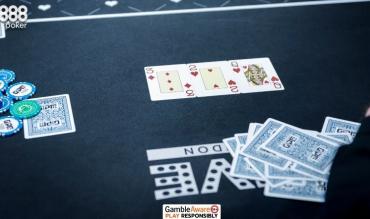
Think about it: you’ve turned over your cards at the showdown and appear to have won. You know this because opponents mutter unpleasant things about you, muck their cards and generally adopt a grumpy demeanour, but then just as you reach for the dosh, bang! The one guy you were ignoring turns over a killer hand and trousers the pot.
It’s a play practiced mostly by greenhorns who consider a bit of drama is what the game requires, so when it next happens, perhaps you could remind them that it’s not quite the done thing.
The Poker Guru
Dear 888 Poker,
I took a really bad beat during an online tournament recently. I was only a couple of spots away from winning a package worth almost $4,000, but ended up with zip. Thing is, I just can't get over it. It’s been bugging me for a few weeks now and I find myself thinking about what I did wrong all the time. Is this a normal reaction after getting so close to a major prize?
Simon
Norwich
Hi Simon,
Have faith. It sounds very much as though you have the symptoms of an affliction known as “Bad Beat Syndrome” (BBS), a state familiar to anyone who has played poker seriously for any length of time
BBS has its roots in basic human emotions and thought processes whenever our safety and security are questioned.
The process begins even before the flop is shown. We’re in a potentially winning position, so our mind contains a number of expectations; we ‘know’, or expect, that our hand will win the pot because our calculations of probability have told us so. In most cases, the flop reconfirms our thinking as it improves our hand.
However, when the turn or river drives a dagger through our dreams of the kudos, the money, the reward, an emotional and mental storm begins to rage inside. A series of emotions, including disbelief, disgust and a sense of betrayal drive these feelings.
Of these, betrayal is the most difficult to accept. “This,” you declare inside, “wasn’t supposed to happen”, a feeling which tends to mix confusion with discontent due to the obvious imbalance between your level of expectation and the reality of what happened. This leads to your constant recall of the moment when you knew you had lost, but what’s to be done?
First, you must stand back and conclude that it is senseless to rehash the loss in your mind. You cannot change what happened. Move past these unlucky cards and focus on the thoughts and emotions that have you stuck in that awful moment. By breaking these thoughts down and eradicating them, the flashbacks will eventually decrease and your game will return. From here, your confidence can be rebuilt and you will soon be back at the table and in great form once more.
The Poker Guru