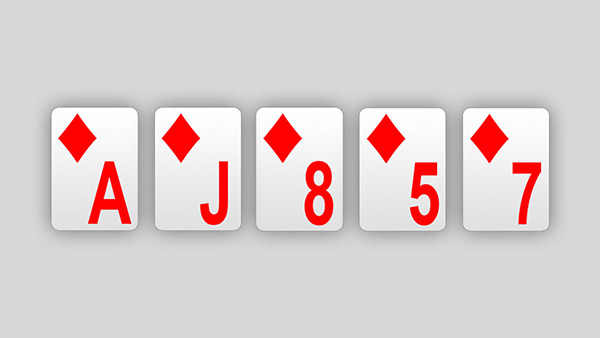
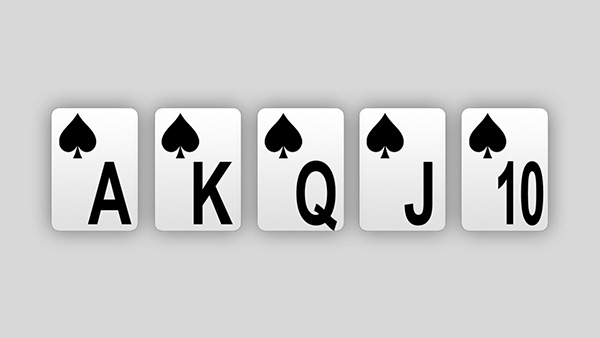
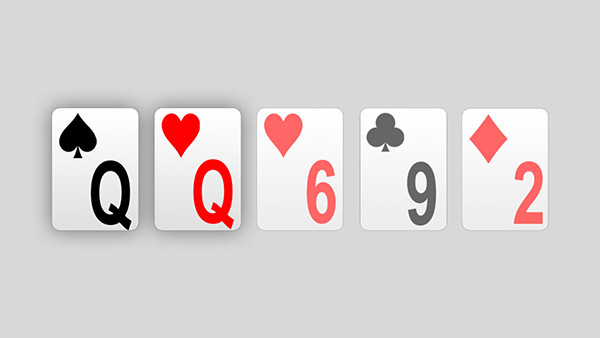
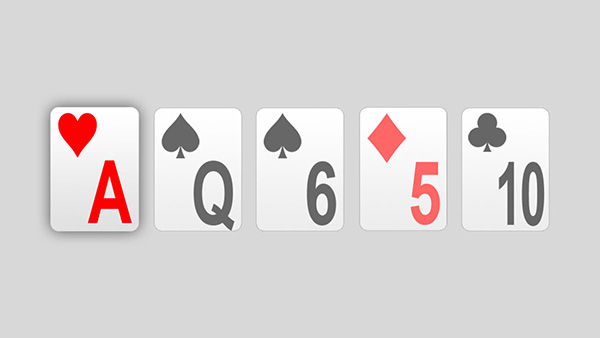
Definition: A Flush is a poker hand made up of five cards of the same suit that are not in consecutive order.
A Flush ranks fourth in the standard poker hand rankings, below a Full House. For example, A♥ J♥ 7♥ 5♥ 2♥ is an ace-high flush in hearts.
A flush is generally easy to recognise and is considered a strong hand in Texas Hold’em. The strongest possible flush is an ace-high flush, where all five cards share the same suit.
The best Flush possible is an ace-high Flush:
A♠ J♠ 10♠ 3♠ 2♠
When comparing flushes, the suit itself does not matter. Instead, flushes are ranked by their highest card, followed by the second-highest card, and so on. This means that not all ace-high flushes are equal.
Note: A straight to the Ace in the same suit is classified as a Royal Flush, which is ranked separately and higher than a standard flush.
How Does a Flush Hand Rank?
In a 52-card deck, there are 5,108 possible flush combinations and 1,277 distinct flush ranks. A flush is ranked by its highest card first, then by the next highest card, and so on until a difference is found.
Here are some examples of flush hands:
A♠ J♠ 10♠ 3♠ 2♠
K♥ 10♥ 7♥ 5♥ 2♥
A♣ K♣ Q♣ 8♣ 2♣
Q♦ J♦ 10♦ 9♦ 3♦
Among these examples, the ace-high flush ranks the highest.
If two players both hold a flush, the winner is determined by comparing the highest card in each hand. If those cards are equal, the next highest card is compared, and so on. For example, a King-high flush beats a Queen-high flush, regardless of suit.
As another example, a K-J-10-5-3 flush ranks higher than a K-J-9-8-3 flush because the third card (10) is higher than 9.
How Does a Flush Hand Match Up?
A Flush is the fourth strongest hand in the poker hand ranking system. A Full House ranks directly above it, while a Straight ranks directly below.
Despite ranking fourth overall, a flush remains a powerful hand in Hold’em and is often strong enough to win at showdown.
The strongest possible straight is the ace-high straight, also known as “Broadway”.
Flush Poker Probabilities
Quick comparison: Flushes occur more often in Pot Limit Omaha than in Texas Hold’em, mainly due to double-suited hands and the extra hole cards.
Below, you can see the pre-flop, flop, turn, and river probabilities of making a Flush in both Texas Hold’em and Pot Limit Omaha.