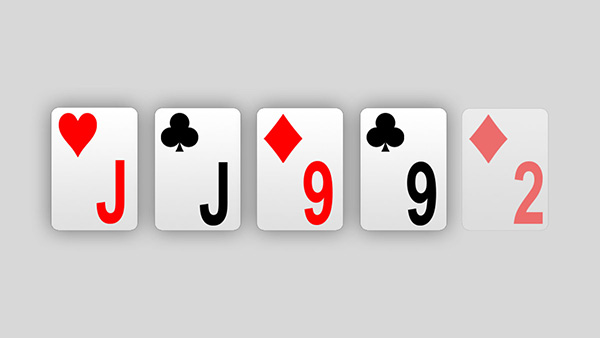
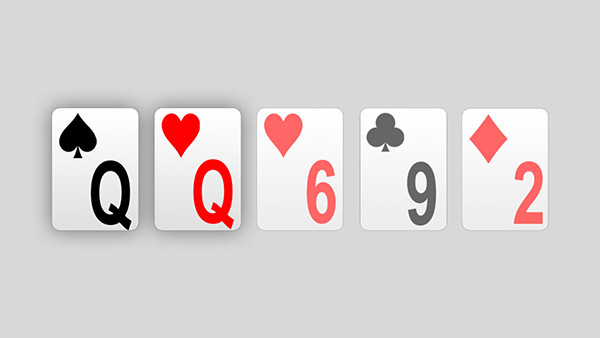
Definition: One Pair is a poker hand made up of two cards of the same rank, along with three unrelated cards known as kickers.
One Pair ranks eighth in the standard poker hand rankings. It is the most common winning hand in poker and appears far more frequently than stronger hands such as Two Pair or Three of a Kind.
The idea behind One Pair is simple: a single matching pair. For example, holding two Tens gives you a Pair of Tens. You can also make One Pair by matching a single hole card with a card on the board, or even by “playing the board” when the community cards themselves contain a pair.
When comparing One Pair hands, the rank of the pair is the primary factor. A Pair of Aces is the strongest possible One Pair, followed by Kings, Queens, and so on. If two players hold the same pair, the remaining three cards are compared in descending order as kickers.
From a hierarchy perspective, One Pair always beats High Card but always loses to Two Pair and all higher-ranking hands. As a result, its value is highly sensitive to board texture and opponent action.
Strategically, One Pair can be playable when it is a high pair or when it matches the top card on the board. Lower pairs should be approached with caution, especially on boards that allow straights, flushes, or higher pairs to form.
Mini-summary: One Pair is the most frequent winning hand in poker. While high pairs can be strong, most One Pair hands are vulnerable and must be played carefully.
Numeric focus: How often do you make One Pair in Texas Hold’em? By the river, the probability is approximately 42.3%.
| Stage | Texas Hold’em | Pot Limit Omaha | Notes |
|---|---|---|---|
| Pre-flop | 42.26% | 42.26% | Based on 5 cards drawn from a full 52-card deck |
| Flop | 28.6% | 49.95% | From one non-paired hole card |
| Turn | 12.77% | 26.67% | From one non-paired hole card |
| River | 13.04% | 27.27% | From one non-paired hole card |
Now that you’ve got One Pair covered, we’ll move on to the next hand in the rankings: Two Pair.