



Poker is a game of calculated risk. Players absorb short-term losses in pursuit of long-term gain, reading situations, managing uncertainty, and making decisions under pressure. For some, those skills don't stop at the felt. Here's a look at ten players who turned success at the poker table into something larger – a business empire, a world title, a life rebuilt from scratch, or a platform to change how people think.
1. Bobby Baldwin – From the Felt to the Boardroom
Few poker players have parlayed success at the table into a career as consequential as Bobby Baldwin's. Born in Tulsa, Oklahoma in 1950, Baldwin discovered poker at 15 in the back room of a local billiards hall. He lost every game at first. That changed when a college roommate at Oklahoma State University taught him the game properly, and he began regularly winning $100 buy-in No Limit Hold'em games among students.
He quit school in his senior year to play full-time. In 1978, at just 28 years old, Baldwin won the World Series of Poker Main Event for $210,000, becoming the youngest champion in the event's history at that time. He went on to win four WSOP bracelets in total, all between 1977 and 1979, and was inducted into the Poker Hall of Fame in 2003. The high-stakes poker room at the Bellagio, Bobby's Room, was named in his honour.
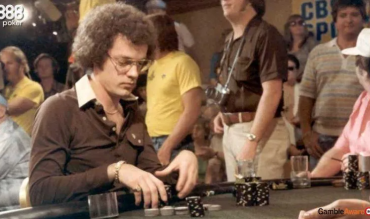
The poker career was impressive, but what followed was extraordinary. In 1984, casino mogul Steve Wynn appointed Baldwin president of the Golden Nugget. He went on to lead the Mirage, then the Bellagio, before becoming CFO of Mirage Resorts in 1999. When MGM Grand and Mirage Resorts merged, Baldwin became CEO of the combined MGM-Mirage corporation and oversaw the $9.2 billion CityCenter development – the largest privately funded construction project in US history at the time, and home to the Aria Resort.
After leaving MGM in 2018, Baldwin was appointed CEO of Drew Las Vegas, a 67-story resort and casino under development on the Strip by real estate firm Witkoff, a role he continues to hold. It's a long journey from the back room of a Tulsa pool hall and one of the most remarkable second acts in the history of the game.
2. Doyle Brunson – The Godfather of Poker
Doyle Brunson passed away on 14 May 2023 at the age of 89. He left behind a legacy that no other player in the history of poker can match.
Born in 1933 in the small Texas town of Longworth, Brunson was a gifted athlete – a standout basketball player and state-level runner – before knee injuries ended any professional sporting ambitions. He graduated from Hardin-Simmons University, worked briefly as a teacher and in sales, and then made a decision that would define the rest of his life: he became a poker player.
"My fledgling poker career was no different than my athletic career, or anything else I did," he wrote in his autobiography, The Godfather of Poker. "I was addicted, obsessed. I put everything I had, all my energies, into my new vocation."
The hard work paid off on a historic scale. Brunson won the WSOP Main Event in both 1976 and 1977, the only player to win back-to-back championships, and famously held 10-2 in the final hand on both occasions, giving his name to the hand ever since. He went on to accumulate 10 WSOP bracelets in total, placing him third on the all-time list alongside Erik Seidel and Johnny Chan. His book Super System, published in 1979, remains the most influential poker strategy text ever written. He was inducted into the Poker Hall of Fame in 1988.
Brunson continued to compete at the highest level well into his eighties, playing in some of the biggest cash games in the world and making his last WSOP cash in 2018. His son Todd also won a WSOP bracelet in 2005, making them the first father-and-son pair to achieve the feat. Brunson is survived by his wife Louise, son Todd, and daughter Pam. Poker has never had a figure quite like him, and it never will again.
3. Mike Sexton – The Ambassador of Poker
Mike Sexton died on 6 September 2020 at his home in Las Vegas, after a battle with prostate cancer. He was 72. Few people in the history of the game did more to bring poker to the world.
Sexton grew up in Dayton, Ohio, and learned to play poker at 13. He excelled at golf and gymnastics in high school – winning a state gymnastics championship – before earning a degree from Ohio State University. After graduating, he joined the US Army and served as a paratrooper. When his enlistment ended in 1970, he taught ballroom dancing for a time, settled in Fayetteville, North Carolina, and supplemented his income with poker winnings. By 1977 he was playing full-time, and by 1985 he had moved to Las Vegas.
"I discovered that I was much more talented than the other guys at the dorm at playing cards," he recalled in his autobiography Life's a Gamble. "I won at whatever card game we were playing most of the time."
In 1989, Sexton won his WSOP bracelet in a $1,500 Seven Card Stud Hi-Lo event for $104,400. But his greatest contribution to the game came off the felt. He joined the World Poker Tour as a commentator in 2002, working alongside Vince Van Patten for 15 seasons. The WPT was the first US network to televise poker with exposed hole cards, and Sexton's voice became synonymous with the poker boom that followed. In 2017 he stepped down from commentary to become Chairman of partypoker.
In 2016 he fulfilled a lifelong dream by winning the WPT Montreal for $317,817 – his only WPT title. Three years later, he was inducted into the Poker Hall of Fame. In July 2020, the WPT renamed its Champions Cup the Mike Sexton WPT Champions Cup in his honour. He finished his career with over $6.7 million in live tournament earnings.
"When I look back on my life, I realise how blessed and fortunate I've been," he wrote. "And, the icing on the cake for me was to have a son at age 60." He is survived by his son, Ty Michael Sexton.
4. Chris Moorman – The Greatest Online Player of All Time
Chris Moorman grew up in Hullbridge, Essex, and discovered poker through an online freeroll he and some friends started playing on Monday evenings at university. He didn't know the rules. His first cash was $125 for a runner-up finish, and he remembers the moment clearly.
"Being on that first final table was exhilarating; looking back on the experience now I know I simply had a sick run of cards that happened to hold," he writes in his book Moorman. "But at the time I thought I'd finally cracked the game."
By his sophomore year, he was making thousands of dollars a week online. He left university, initially concealing the decision from his parents by faking his exam results. When he eventually came clean, his mother was shocked, but his father gave him six months to prove himself. Six months later, his results were so convincing that his father asked him to teach him how to play.

Moorman went on to become the most successful online tournament poker player in history, with approximately $15 million in online winnings. His live game followed suit: in 2011 he made three major final tables in a single year, including a runner-up finish in the WSOP Europe Main Event for $1.1 million. In 2014 he won the WPT LA Poker Classic for $1 million. In 2017 he won his first WSOP bracelet, and he has since added a second. His live tournament earnings now exceed $11.6 million.
"My huge love for the game keeps me passionate about trying to improve," he says. "Also, having no ego in poker helps me reflect on mistakes and be honest with myself when I play badly."
Now based in Brighton, Moorman remains one of the most active and consistent players on the circuit, with his latest cash recorded in January 2026.
5. Phil Hellmuth – The Brat and the Bracelets
Phil Hellmuth may be the most polarising figure in the history of tournament poker. Known as much for his outbursts and theatrical late entries as for his results, he has nonetheless built a record that no other player has come close to matching. As of 2025, Hellmuth holds 17 WSOP bracelets – the most in history – and has accumulated over $30 million in live tournament earnings.
Hellmuth grew up in Madison, Wisconsin, and discovered poker at the University of Wisconsin. In his autobiography Poker Brat, he writes candidly about struggling in school, battling ADHD, and a severe case of warts that covered both his hands. None of it stopped him. In 1989, at 24 years old, he won the WSOP Main Event, becoming the youngest champion at the time, and took home $755,000. He went broke multiple times on early trips to Las Vegas before that breakthrough.
The bracelets kept coming over the next three decades, across multiple formats and generations of opponents. In 2012, he became the only player to win the Main Event in both the US and Europe in the same year. His record of 17 bracelet wins spans five different decades – a feat of longevity as impressive as the total itself.
Beyond the felt, Hellmuth has built a career as an author, TV personality, and brand ambassador. He is also, by his own account, devoted to his family.
"Life is all about balance," he says. "I have strived to keep family number one, and I've done a good job of that. I would tell young pros to take time off and enjoy the freedom, enjoy the successes. If they play too much, they will burn out."
6. Jennifer Harman – The Teenage Prodigy Who Never Stopped
Jennifer Harman has been playing poker since the age of eight, winning penny-ante games against family members around the kitchen table. At 13, she sat in for her father at a game with his friends after he lost most of his chips early. By the end of the night, she had brought him back to even.
Growing up in Reno, Nevada, Harman obtained a fake ID at 16 and began playing in local casinos. Her rise through the stakes was interrupted at 18 when she was diagnosed with a serious kidney condition, the same illness that had taken her mother's life. Between dialysis treatments, she continued to play. A transplant followed. She went to college at the University of Nevada-Reno, took a cocktail waitress job at Harrah's, and played poker after her shifts.
She eventually relocated to Los Angeles, then Las Vegas, where she became a fixture in some of the biggest cash games ever played. In 2004 she required a second kidney transplant. She took a year away from the game and came back.
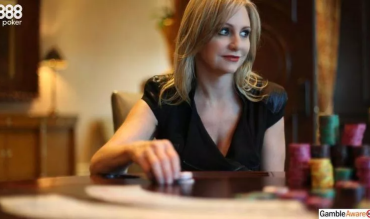
On the tournament circuit, Harman won her first WSOP bracelet in 2000 in a No Limit 2-7 Single Draw event, a game she had never played before, receiving a five-minute tutorial from Howard Lederer before sitting down. She won a second bracelet in 2002 in a $5,000 Limit Hold'em event, becoming the first woman to win two open WSOP events (excluding the Ladies Event). She was inducted into the Poker Hall of Fame in 2015. Her live tournament earnings exceed $2.9 million, though the majority of her income over the years has come from cash games, where she has competed at the very highest stakes in the world. At the 2024 WSOP, she finished fifth in the $10,000 No Limit 2-7 Lowball Draw Championship for $93,615 – still competing, still winning.
"Today, when someone asks me why I play poker professionally, I tell them it's the love of the game," she says. "Poker retains its appeal because it provides a never-ending challenge: you're always learning, stimulating your brain when you're playing."
7. Scotty Nguyen – Refugee to Main Event Champion
Scotty Nguyen was born in 1962 in Nha Trang, Vietnam, the eldest of eight children. He grew up during the Vietnam War, witnessing violence that most people will never encounter. He started playing poker on street corners at eight years old.
"I have seen atrocities that no child should ever witness," he wrote in Deal Me In. "As a youth, I would be exposed to horrible things just walking to school and back."
At 14 he was drafted into the army. His mother sold everything she owned to help Scotty and his younger brother flee the country. They spent two years in a refugee camp in Taiwan before American sponsors brought them to the US – Scotty to Chicago, his brother to California. He didn't speak English. His first sponsor put him to work on a farm. Through a chance meeting, he was relocated to California to join his brother, where he was treated, for the first time, like family.
Nguyen dropped out of high school to support his family back in Vietnam, working a string of low-wage jobs before arriving in Las Vegas with $6 in his pocket and taking a job as a casino busboy. After turning 21, he became a poker dealer at the Holiday Inn Casino and began quietly studying the players he was dealing to, convinced he could beat them.
"I already lived humbly, but with my new mission I lived even more frugally," he wrote. "I slowly accumulated money, waiting patiently for the opportunity to play for myself."
He ran his bankroll to $1 million by age 23, then lost it all in three months. He went back to dealing, started again, and didn't look back a second time. The pinnacle came in 1998 when he won the WSOP Main Event for $1 million, famously telling his opponent on the final hand: "You call, it's gonna be all over, baby." – a line that became one of the most quoted in poker history.
Nguyen has gone on to win five WSOP bracelets across multiple formats and one WPT title, accumulating over $12.7 million in live tournament earnings. He was inducted into the Poker Hall of Fame in 2012. He still plays – his most recent cash came in June 2025 – and still supports families in Vietnam. His is one of the most remarkable stories the game has ever produced.
8. Chris Moneymaker – The $39 Satellite That Changed Poker Forever
In May 2003, Chris Moneymaker, a tax accountant from Tennessee with no significant live poker experience, won the WSOP Main Event for $2.5 million. He had qualified online for $39. The win didn't just change his life. It changed the game.
Moneymaker was born in Atlanta in 1975 and raised in Knoxville, Tennessee. He earned a master's degree in accounting from the University of Tennessee and was working as an accountant when he began playing online poker for fun. His father had introduced him to cards during his student years. In 2003, he entered a $39 online satellitein and won his seat to the WSOP Main Event.
What happened next is the most famous sequence in the history of the game. Moneymaker navigated a field of 839 players, bluffed poker legend Sam Farha on a nationally televised hand, and won the bracelet and $2.5 million. The combination of his amateur status, his name, and the explosion of online poker that followed created what the industry calls the Moneymaker Effect, a global surge in poker participation that filled tournament fields and created a new generation of players.
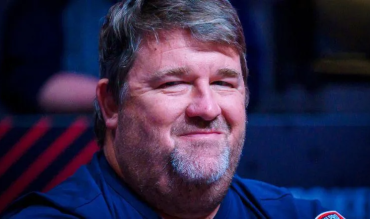
"I went back to work, because I didn't realise I could be making enough money to retire," Moneymaker told PokerNews. The demands of a travelling poker career eventually cost him his first marriage. He has been married since 2005, and now lives near Nashville, Tennessee.
He spent 17 years as an ambassador for a major online poker operator and has remained one of the game's most effective promoters. On the felt, he has continued to perform at the highest level: in 2023, he finished fifth at the Triton London $250,000 Luxon Invitational for over $2 million – his first seven-figure cash since the WSOP win two decades earlier. The following year he won the Triton Montenegro GG $25,000 Million Live event for $903,000. He was inducted into the Poker Hall of Fame in 2019. His live tournament earnings now stand at over $8.6 million.
Twenty years on, Moneymaker remains the most powerful argument ever made for the idea that anyone can sit down and play poker.
9. Joe Hachem – The Chiropractor Who Won $7.5 Million
Joe Hachem was born in Lebanon in 1966 and moved to Melbourne, Australia with his family at the age of six. He built a career as a chiropractor, practising for 13 years, until a rare blood disorder affecting the blood vessels in his hands made it impossible to continue. With his profession gone, Hachem reinvented himself as a mortgage broker and began taking poker more seriously, playing regularly at the Crown Casino in Melbourne.
In 2005, he travelled to Las Vegas to play the WSOP for the first time. He cashed in a $1,000 No Limit Hold'em side event, finishing tenth for $25,850, and used that money to buy into the Main Event. What followed was one of the most celebrated runs in WSOP history.
Hachem was short-stacked for much of the final table, staying patient while bigger stacks eliminated each other. He eventually took the chip lead with three players remaining, and went on to defeat Steve Dannenmann heads-up on a flopped straight, winning $7.5 million – at the time the largest prize ever awarded in tournament poker.
He became the first Australian to win the WSOP Main Event, and the effect on poker in his adopted country was immediate. The 2007 Aussie Millions attracted the largest field ever seen at a major tournament held outside the United States. Hachem is widely referred to as the Godfather of Australian Poker.
He returned to the Bellagio in December 2006 and won the WPT Five Diamonds World Poker Classic for $2.2 million, placing him in the rare company of players who have won both a WSOP Main Event and a WPT Championship. He was an inaugural inductee into the Australian Poker Hall of Fame in 2009. His live tournament earnings exceed $12.2 million.
Hachem has spoken often about how adversity shaped his approach to both poker and life. Forced out of one career by illness, he found another, and made the most of it in a way few people ever could.
10. Liv Boeree – From the Poker Table to the TED Stage
Liv Boeree graduated from the University of Manchester with a first-class degree in Astrophysics. She played lead guitar in a heavy metal band. And in 2005, she was selected for a British poker reality TV show, which is how she first picked up a hand of cards.
Within five years, she was one of the best players in the world.
Born in Kent in 1984, Boeree became a professional in 2010. That same year she won the EPT San Remo, one of the most prestigious events on the European circuit, for $1,698,300, confirming her status as a genuine elite-level player rather than a media personality with a poker habit. In 2017 she won a WSOP bracelet in the Tag Team No Limit Hold'em Championship alongside Igor Kurganov, making her the only woman in history to hold both an EPT title and a WSOP bracelet. The pair donated 50% of the prize to Raising for Effective Giving, the charitable platform they had co-founded in 2014.
Raising for Effective Giving promotes the effective altruism approach to charitable giving, directing donations to the causes and organisations where they can do the most measurable good. The platform has since raised over $14 million for charitable causes worldwide.
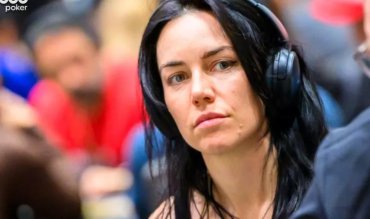
In 2019, Boeree retired from professional poker and stepped back from her ambassadorship at a major online poker site. She pivoted fully to science communication, public speaking, and philanthropy. Her TED Talk on decision-making and probabilistic thinking has been viewed nearly three million times. Her podcast Win-Win with Liv Boeree has built an audience of over 117,000 subscribers, exploring game theory, physics, and rational thinking. She has spoken at Google, Oxford, and Cambridge, and published scientific articles including a piece for the Future of Humanity Institute.
In December 2024, she returned to the poker table for the first time since her retirement, entering the $25,000 WSOP Super Main Event in the Bahamas. She finished fourth for $2,800,000, breaking the record for the largest single cash ever made by a female player. She donated $560,000 of those winnings to animal welfare causes.
Boeree's story is perhaps the clearest example of what this list is really about: a person who used poker not as a destination, but as a starting point. Her live tournament earnings now exceed $6.7 million, but her most significant work has nothing to do with chips.
