

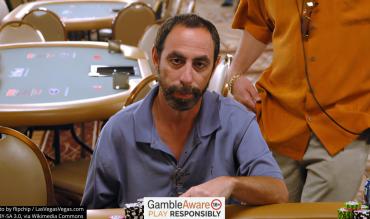

Barry Greenstein built his reputation in the highest-stakes poker cash games in Las Vegas and California, long before tournament poker put the pros on television. Three WSOP bracelets, two WPT titles, and a 2011 induction into the Poker Hall of Fame confirmed a reputation the private games had already built.
Greenstein has never publicly disclosed his personal finances, and all figures discussed here are estimates drawn from publicly available sources. The gap between what the record shows and what he actually retained is wider than for almost any other player in the game.
Who Is Barry Greenstein
Barry Greenstein turned professional in 1991, leaving a software engineering career at Symantec to play poker full-time. He was already a regular in the biggest cash games on the West Coast, competing in The Big Game at Bellagio alongside Doyle Brunson, Chip Reese, Phil Ivey, and Chau Giang at stakes reaching $4,000/$8,000 limit. It was those rooms, not the tournament circuit, that first established his standing.
His range across formats is genuinely unusual. The three WSOP bracelets (won in 2004, 2005, and 2008) span No-Limit 2-7 Triple Draw, Pot-Limit Omaha, and Razz. He contributed a chapter to Super/System 2, published Ace on the River in 2005, and spent a decade as one of the most visible figures in televised poker across High Stakes Poker and Poker After Dark.
Barry Greenstein Net Worth (Estimated)
Estimates place Barry Greenstein's net worth between $10 million and $15 million, a range based on the publicly visible parts of his career and significant inferences about the parts that are not.
His Hendon Mob tournament record of $8,635,372 across 272 cashes, which ranks him 233rd on the All-Time Money List, is the best-documented part of his career, but it's an incomplete guide to what he retained. Tournament buy-ins, travel, and US tax withholding all reduce gross prize money before a player sees any of it. In Greenstein's case, there's an additional factor: from 2008 onwards, he publicly committed to donating his net tournament winnings to charity each year. The database records competitive results; how much of it he kept is a question with a genuinely complicated answer.
Cash game income, his primary discipline, has never been tracked by any public source, and its contribution to his overall finances is unknown.
The Poker Hall Of Fame showed up today for @WSOP Event 76: $1,979 Poker HOF Bounty! Look at all of these amazing legends of the game!
Follow our live updates here:https://t.co/xlFohLDlJn pic.twitter.com/xykC1YNVxU— PokerNews (@PokerNews) July 11, 2022
Tournament Winnings Breakdown
Greenstein's Hendon Mob total of $8,635,372 covers 272 recorded cashes across more than three decades, from his first documented result in 1992 through to a cash in July 2025. Unlike several players in this series whose totals are dominated by a single payday, his biggest result – $1,278,370 for winning the 2004 WPT Jack Binion World Poker Open – accounts for roughly 15% of his career total. The remaining 85% reflects sustained volume across circuits, formats, and eras.
His five largest recorded cashes:
- WPT Jack Binion World Poker Open, 2004 – $1,278,370 (1st place)
- Larry Flynt $125K Seven-Card Stud, 2003 – $770,000 (1st place)
- WSOP $50,000 H.O.R.S.E., 2008 – $355,200 (5th place)
- North American Poker Championship, 2007 – $316,638 (4th place)
- WSOP $5,000 NL 2-7 Triple Draw, 2004 – $296,200 (1st place)
His WSOP record covers 149 cashes for $3,420,620 – nearly 40% of his career total from a single annual series. In 2008 alone, he cashed six times at the WSOP for $768,461 and finished second in the Player of the Year standings.
None of these are profit figures. Each carries buy-in costs, travel, accommodation, and applicable tax withholding. Greenstein put it plainly in 2006, explaining why he was changing his donation model:
Until now, I was donating the pay-off each time I cashed, but I can't afford to continue doing that. I didn't anticipate the growth and expense of tournament poker.
Few primary sources have described the gross-versus-net gap so directly.
Other Income: Sponsorships, Backing, and Professional Deals
Greenstein's income beyond prize money covered several areas, though no specific figures for any of them have been disclosed.
The most substantial confirmed arrangement was a long-running sponsorship with a major online poker operator, which ran from roughly the mid-2000s through early 2019. He played online under the alias 'barryg1' and represented the site across tournaments and televised events, parting ways in 2019 after indicating the deal was no longer financially worthwhile.
Ace on the River, published in 2005, generated royalties over a sustained period. The World Poker Tour champion Tuan Le cited it as a direct influence on his own results, and Greenstein made a habit of giving signed copies to players who eliminated him from tournaments, a gesture that became one of the more distinctive traditions in the game.
3/ Barry Greenstein’s Book Gifting
• Known for giving away an autographed copy of his book Ace on the River to players who bust him. pic.twitter.com/k5PuYqoWXq— Lexy Gavin-Mather (@LexyGavinPoker) April 13, 2025
Television appearance fees from High Stakes Poker and Poker After Dark, along with PokerRoad, a strategy and entertainment site he co-founded with his stepson Joe Sebok, added further income without any disclosed valuation.
Public Profile, Lifestyle, and Privacy
At Symantec, Greenstein reportedly turned down a salary-doubling offer from Bill Gates with the line: "I don't work for money. I work for my projects." Whether or not the story is polished in the retelling, it captures something consistent about him. He has spoken openly about strategy, charitable giving, and the game itself. On his personal finances, almost nothing. Greenstein's public record is of what he gave away, not what he kept.
FAQ – Barry Greenstein Net Worth
Is Barry Greenstein a millionaire?
Yes. His tournament record alone exceeds $8.6 million in gross prize money, and decades in the highest-stakes cash games add an untracked figure on top. His post-2008 charity pledge complicates any simple reading of the database.
What is Barry Greenstein best known for in poker?
Greenstein is best known as 'The Robin Hood of Poker,' a nickname earned through his long-standing practice of donating tournament winnings to charity, primarily Children Incorporated. The generosity reinforces a reputation built on results: three WSOP bracelets, two WPT titles, and a 2011 induction into the Poker Hall of Fame.
Do tournament winnings equal net worth?
No. Greenstein said so plainly in 2006: buy-in costs and travel had grown faster than his gross results, and he could no longer afford to donate each payout individually. Prize figures are gross payouts; the costs come out before a player sees any of it.
Did Barry Greenstein earn income outside poker tournaments?
Yes, within the poker world: a long-running online poker operator sponsorship, royalties from Ace on the River, television appearance fees, and PokerRoad, a strategy and entertainment site he co-founded. Greenstein left a software engineering career at Symantec in 1991 to play poker full-time, and no business interests or professional activity from outside the poker world have been documented in the decades since.
Why are net worth estimates for poker players often ranges?
Prize money is the only income that enters the public record, and even that is a gross figure before costs. In Greenstein's case, much of the tournament total was directed to charity, making the Hendon Mob figure an unreliable proxy for net worth.
